

In an interview
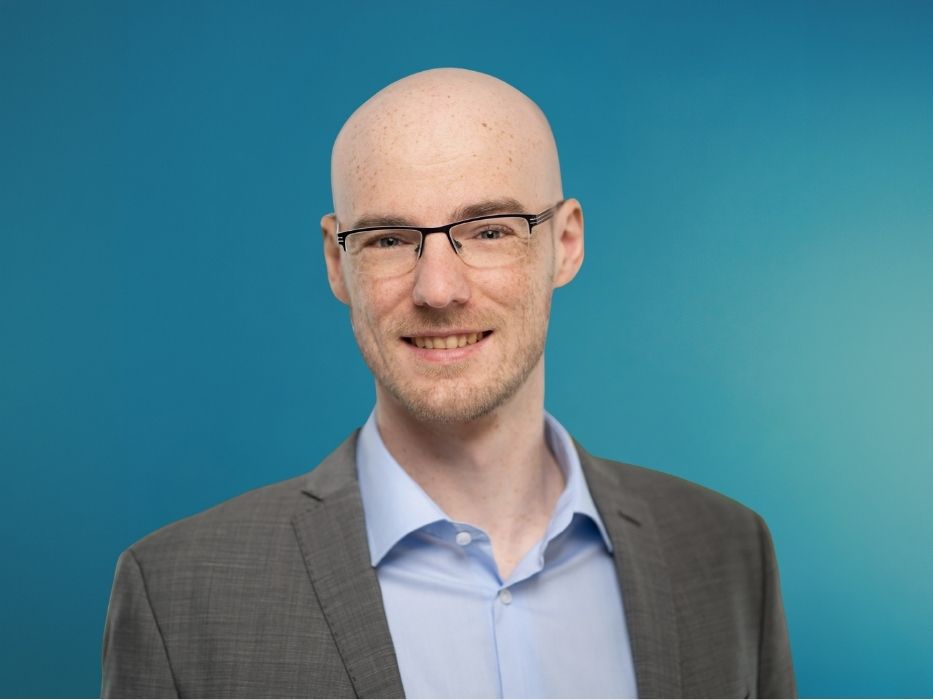
Frank Hermannsdörfer - Data Scientist
About Your Job
What does your typical workday look like?
A typical workday begins with checking company emails as well as emails on the client’s system. In my project, we follow the Scrum process, so tasks for each sprint are clearly distributed via Azure DevOps and responsibilities are assigned. If there are issues with the application we’ve developed, I investigate the errors and create a new bug report. On a day-to-day basis, the focus is mostly on developing new features for an application that processes tables from Excel files. In addition to normalizing the values, the primary focus is on automatically classifying column types. To do this, for example, I investigate whether features can be automatically generated from the column contents by calculating word vectors using FastText. Other tasks involve identifying specific columns and processing them. I also regularly deploy the latest version of the software to the production environment. This includes a brief check at the end to ensure everything is working as expected.
What makes your team special?
Good coordination and planning, expertise, and a professional yet friendly atmosphere.
What's great about your job?
At HMS, I get a great overall package, including my coworkers, my responsibilities, and my salary, that makes me look forward to coming to work. My work consists of interesting tasks that still challenge me, even after more than three years on the project. On top of that, there are lots of nice and interesting coworkers, as well as a wide range of recreational activities like a soccer group. This is all rounded out by relatively flexible working hours - it depends mainly on the project, but outside of client meetings, I have a lot of freedom to manage my own schedule - and excellent opportunities for professional development.
What challenges does your job present?
Working together with our clients to find the best solutions to known problems and proactively seeking out additional opportunities that will advance client projects. Through my project work, I am occasionally exposed to new technologies such as the Azure Portal and its services, Kubernetes, or Java Spring and must familiarize myself with them.
What kind of projects are you working on?
I am currently working on a project that enables an insurance company to process insurance-specific Excel files. Machine learning models are also used to predict the column type. There are two aspects to this project. On the one hand, suitable models must be created. To do this, training data is first collected and cleaned. Then, appropriate features must be identified and the models trained. On the other hand, there is the software development aspect, in which the models, along with code for normalizing and cleaning the data, must be integrated into a complete application.
What has been your most exciting project so far?
As part of the project to process insurance-specific Excel files, a proof of concept was also conducted to use natural language processing to analyze the content of entire tables and determine their subject-matter classification (e.g., whether they contain data on natural disasters).
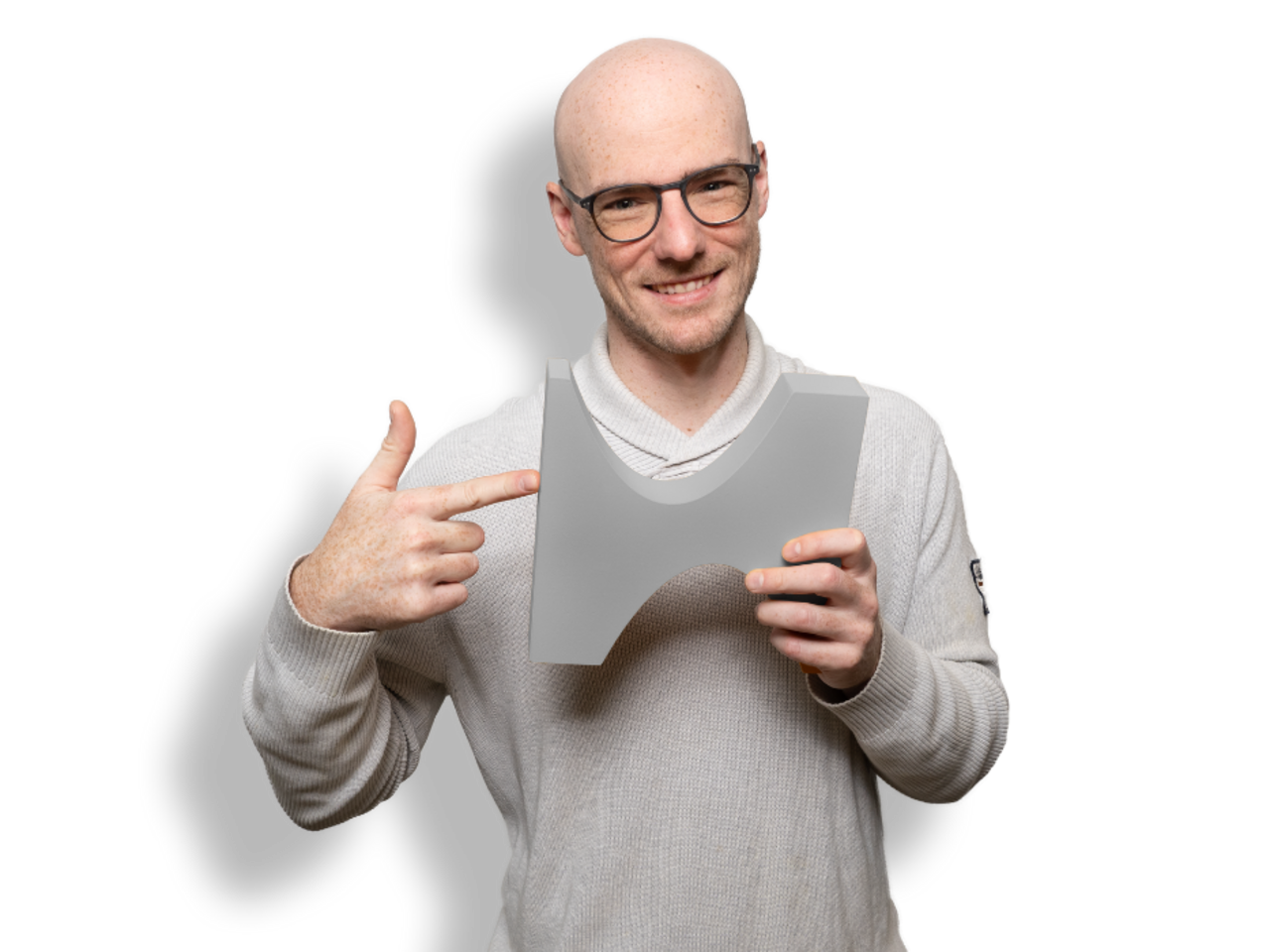
Employee Initiative: Soft Skills Café
How did the Soft Skill Café come about?
The idea stems from a real-life situation I encountered in my day-to-day project work, where I realized afterward that my response to the client’s question could have been much better. I wished I could have practiced such situations - and similar ones - in a “safe” environment so that I could respond with greater confidence in the future. I then discussed the idea with my project manager, Benjamin, during a feedback meeting. Benjamin encouraged me to pursue it further. Kai, my department head, also welcomed the idea, so we immediately set out to find a concrete way to implement it. This led to the development of the regular “Café” format.
What are the goals of the Soft Skills Café?
In day-to-day project work, challenging conversations can arise between project staff and clients. In such situations, a staff member may inadvertently maneuver themselves into an unfavorable position. For example, they might react to unexpected special requests with hasty commitments that, in hindsight, prove untenable. The goal of the workshop is to simulate and discuss these situations in advance through role-playing in order to develop appropriate communication strategies. The focus is on trying out and “experiencing” the situation firsthand, rather than on passive listening.
What does participating in the the café look like?
The café takes place every 4–6 weeks in small groups of up to 8 people. It is led by an experienced senior project manager. Conversational scenarios are practiced through 2–3 role-playing exercises, in which participants take turns assuming the roles of the various conversation partners. Successful communication strategies are demonstrated using both positive and negative examples.
Can you give a few examples of role-playing games?
- A new feature is urgently needed and in high demand. However, implementing it will require a major refactoring. How do you communicate this to the client?
- “I thought you were doing a good job. Why should we pay extra for testing?” How do you help the client understand?
- Time is tight, and the feature is urgently needed. How can you respond productively to repetitive questions like, “Is the feature done yet?”
- A team member frequently overlooks major errors during pull request reviews. How do you bring this to their attention?
About HMS
Why is HMS a good fit for you?
A good balance of professionalism and a relaxed atmosphere. There’s also a variety of tasks and good opportunities for professional development. The company has a positive atmosphere, with group activities like the Christmas party or team events which aren’t mandatory but are enjoyed by everyone. Suggestions for improving processes or for professional development are welcome and taken seriously.
What is the hierarchical structure like in everyday life?
The hierarchies are fairly flat; for example, I have no qualms about scheduling appointments with my project manager or even my department head, and I know that my requests will be taken seriously and, whenever possible, accommodated.
In your opinion, what is HMS's top professional qualification?
With its three departments, HMS provides a broad foundation for responding to individual customer requests and needs. Collaboration between the departments - both in terms of knowledge transfer and project support - is extensive and runs smoothly. As a result, HMS offers a perfectly assembled team to meet nearly any customer request.
What can new employees expect from HMS?
First and foremost, definitely the feeling of being welcome. Plus, an interesting work environment with good onboarding and interesting projects.
Who isn't a good fit for HMS?
Lone wolves who can't work as part of a team.
What advice would you give to applicants?
I would choose HMS again. I can wholeheartedly recommend the company.